

Ready-to-Move vs Under-Construction Flats in Mumbai: Which Should You Choose?


By Chandak Group
10 Minutes
15th June 2026
0 like
Ready-to-Move vs Under-Construction Flats in Mumbai: Which Should You Choose?
TL;DR
Ready-to-move flats are ideal for buyers who want immediate possession, rental income, and minimal risk, while under-construction flats offer lower entry prices and higher appreciation potential for those willing to wait. The right choice depends on your budget, timeline, risk appetite, and long-term financial goals.
Let's say you've shortlisted two flats in Mumbai.
The first is ready to move in. You can collect the keys within weeks and start living there immediately. The second is part of a newly launched project in the same micro-market, costs less today, and promises modern amenities and potentially higher appreciation by the time it's completed.
So, which one is the smarter choice?
It's a question thousands of Mumbai homebuyers grapple with every year.
And in 2026, with an average residential price growth of 7% and several new residential projects in Mumbai entering the market, making the right decision has become more important than ever. The answer depends on your budget, timeline, risk appetite, and long-term goals.
This guide breaks down the key differences between ready-to-move and under-construction flats to help you choose confidently.
What Are Ready-to-Move (RTM) Flats?

A ready-to-move flat is a completed unit that has received its Occupancy Certificate (OC) from the local municipal authority. You get the keys and can occupy immediately after registration. RTM homes offer certainty, established amenities, and no construction risk. RTM flats can be brand-new inventory from a developer or resale homes from existing owners.
What Are Under-Construction Flats?
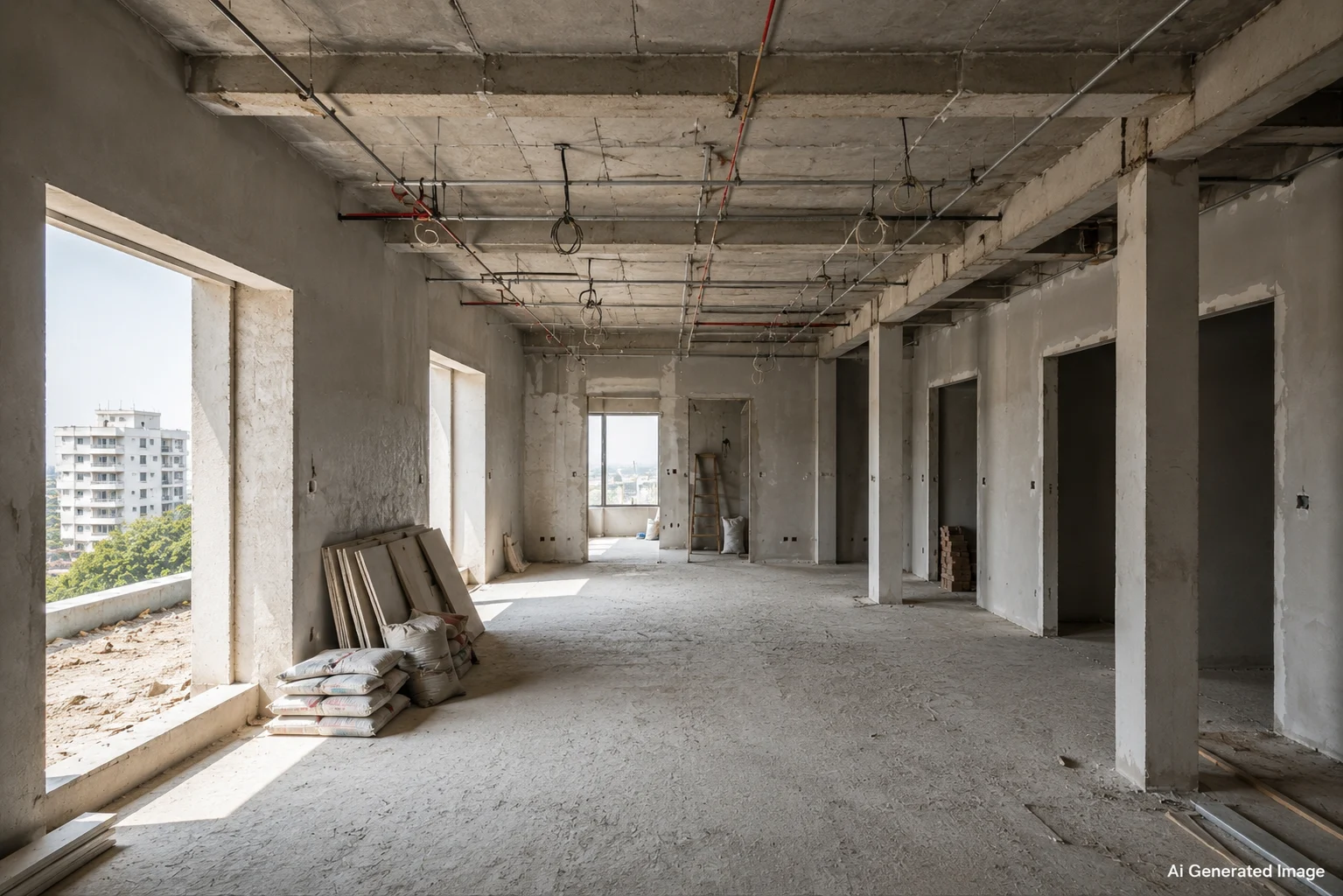
An Under-Construction (UC) flat is a property that is still being built and is offered for sale before completion. These homes often come at lower base prices and flexible payment plans linked to construction stages, but possession may take 2–5+ years.
Because the market and infrastructure around the project can develop over time, UC flats can benefit from higher appreciation potential, assuming on-time delivery and strong demand.
Key Differences: Ready-To-Move vs Under-Construction Flats
1. Costs
Under-construction (UC) flats usually have lower base prices compared with Ready-to-Move (RTM) properties; often 10–15% less in the same area.
However, UC properties attract GST (typically 5%), whereas RTM flats with occupancy certificates are usually GST exempt, narrowing the effective price gap. Additionally, RTM buyers can start earning rental income immediately, potentially offsetting EMI costs.
You must also account for stamp duty, registration, maintenance deposits, and interior costs. Consider the total cost of ownership rather than just the headline price.
2. Risks
Ready-to-Move flats carry minimal purchase-stage risk since you inspect before you buy. UC carries the risk of delays, modifications to plans, incomplete amenities, or, in extreme cases, project abandonment.
In August 2025, MahaRERA suspended the registrations of 4,812 lapsed housing projects across Maharashtra and froze their associated bank accounts due to non-compliance.
- RTM: No delivery risk. Physical defects visible before booking.
- UC: Delayed possession is the most common dispute in Maharashtra. Under MahaRERA, buyers earn interest at MCLR + 2% for every day of delay (Check the current rates, they tend to change).
- How to reduce UC risk: Verify MahaRERA registration.
3. Appreciation Potential
UC properties in growth corridors consistently outperform RTM on capital appreciation.
In Mumbai's emerging micro-markets (Thane, Panvel, Navi Mumbai), we've seen that UC properties have an approximate 12–18% of annual appreciation by possession.
On the other hand, RTM flats in established zones typically appreciate 6–10% per year.
The logic is simple: you buy at pre-construction prices and by the time you get possession, surrounding infrastructure (metro stations, roads, malls) has already priced in appreciation.
4. Possession & Timing
For families actively paying rent, this is often the single deciding factor. RTM means you shift within weeks of registration. Buying an under-construction flat means you have to wait for 2–4 years while your EMI clock has already started.
Always cross-check the RERA-registered completion date before signing the Agreement for Sale.
5. Amenities & Infrastructure

New under-construction residential projects in Mumbai 2026 are designed to higher standards. Developers include smart home wiring, EV charging points, better green coverage, and modern wellness amenities that older, ready-to-move buildings rarely offer.
With RTM, the building you see on site visit day is the building you get. No surprises, but also no upgrades. Verify water pressure, elevator maintenance, and society corpus fund health.
6. Location & Micro-Market
RTM flats in sought-after micro-markets like Andheri, Bandra, Chembur, Vile Parle, and Malad are limited and command a meaningful premium.
Upcoming projects in Mumbai 2026 offer access to the same micro-markets at lower entry points, but only with developers who have a demonstrated delivery record.
- RTM: Proven, visible micro-market. You know exactly what neighbourhood you are buying into.
- UC: Opportunity to enter a developing micro-market ahead of infrastructure completion. Higher reward, higher patience required.
7. Customization
Buyers investing in under-construction projects often get the upper hand in picking the floor, facing, and layout variant. Some developers even allow pre-possession customisations to flooring, kitchen tile choices, or partition walls.
On the contrary, ready-to-move homes offer limited customisation without expensive renovation work.
8. Legal Checks and Documentation
Both require thorough due diligence. But the checklists differ:
For RTM flats in Mumbai, verify Occupancy Certificate (OC), completion certificate, clear title, society formation, no encumbrances, and property tax paid-up status.
For UC apartments, you must check MahaRERA registration, escrow account details (70% of collections must go to a project-specific escrow), review the Agreement for Sale carefully for possession date and penalty clauses, and check the developer's track record.
Also read: Buying A House? Here's A Documents Checklist
Quick Comparison: RTM vs Under-Construction at a Glance
| Factor | Ready-to-Move (RTM) | Under-Construction (UC) |
|---|---|---|
| Entry Price | Higher (fully built in) | 10–20% lower |
| GST | Zero (OC received) | 5% (1% for affordable homes under ₹45 lakh) |
| Possession | Immediate | 2–4 years |
| Rental Income | From Day 1 | Only after possession |
| Appreciation Potential | 6–10% (established zones) | 12–18% (growth corridors) |
| Customisation | Limited or costly | Floor, facing, and some finish options available |
| Delivery Risk | None | Present (largely mitigated by RERA regulations) |
| Physical Inspection | Full inspection before purchase | Based on plans, renders, and sample flats |
| Payment Structure | Full payment on registration (subject to financing) | Staggered, construction-linked payments |
| Amenities & Design | As built | Latest design, technology, and lifestyle amenities |
Who Should Choose What? A Decision Guide
| Choose ready-to-move if you… | Choose under-construction if you… |
|---|---|
| Need to move in within 3–6 months | Have 2–4 years of flexibility before needing possession |
| Are currently paying rent and want to stop | Are comfortable managing rent + EMI temporarily |
| Want to verify everything before paying | Want first-pick of floor, facing, and layout |
| Prefer zero GST and simpler tax math | Want to enter a premium location at lower price |
| Want immediate rental yield (investor) | Are targeting capital appreciation in a growth corridor |
| Are risk-averse or a first-time buyer | Have thoroughly checked the developer's delivery record |
Final Thoughts
There is no universal right answer between RTM and UC; only the right answer for you. If stability, immediacy, and zero surprises are your priority, a ready-to-move flat is your best bet in 2026.
If you have time, flexibility, and a clear-eyed approach to risk, under-construction projects in the right micro-market and with a trusted developer offer a compelling entry point.
What does remain universal is this: in a market as dynamic as Mumbai, who you buy from matters as much as what you buy. A developer with a proven track record of on-time delivery, transparent documentation, and post-possession support is non-negotiable.
With over 40 years of experience and homes delivered to 12,000+ families across Mumbai, Chandak Group has built its reputation on one promise: Promises Made. Promises Kept. And we bring that legacy to all our projects.
Frequently Asked Questions
You may also like

Is Ganesh Chaturthi 2026 the Right Time to Buy a Flat in Mumbai? The Honest, Numbers-First Answer

Discover Mumbai’s Hidden Investment Gems

Buying A Home During Festive Season? Things Mumbai Families Should Consider Before Making A Decision
